

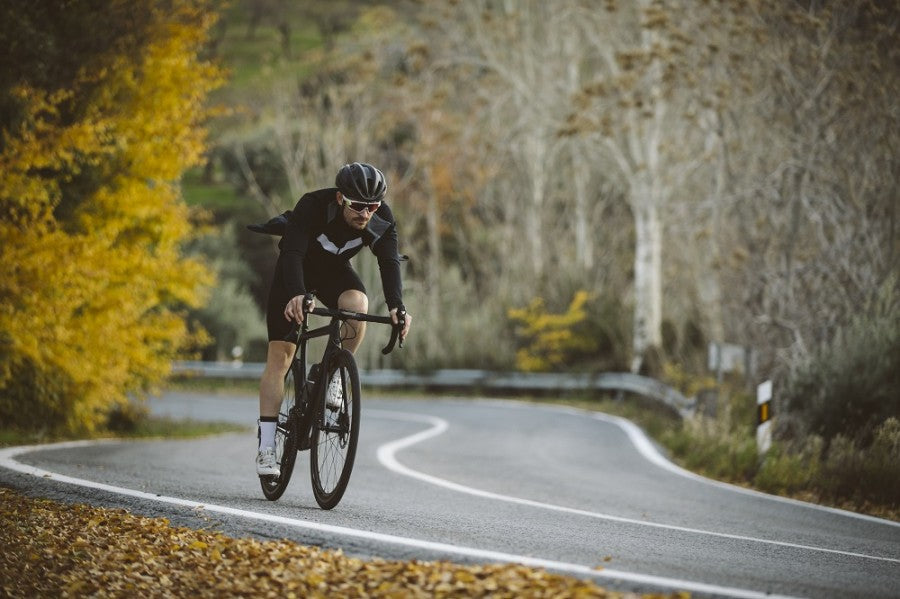
Boost your fitness on the bike with this basic training
As a cyclist, it's important to know that your leg muscles aren't the only important part of fitness on the bike. Cycling activates your glutes, back, shoulder, arm and neck muscles. That is why it is important to focus on a full body workout. Good basic training is important if you want to improve your cycling fitness and performance. Get ready for the next cycling season and get those wheels moving!
You don't get the fitness of a Tour de France rider overnight. :-) The secret of the best cyclists is tens of thousands of kilometers of brisk aerobic riding. You'll save yourself a lot of agony if you learn to enjoy the process of slow, steady improvement.
Strength training is part of your cycling fitness
If you want to improve your cycling fitness, the first thing you probably think about is training your legs. Legs are indeed an important part, but don't forget that you are doing more than enough leg training while you are actually cycling. In preparation, it is better to focus on total body training. Try to spend only a quarter of your training time on leg strength and focus on your other muscles the rest of the time.
Flexibility is important to stay healthy on and off the bike
If you really want to be fit this cycling season, make sure you mix flexibility training into your fitness routine. Before each ride, take at least 10 minutes to stretch properly to actively support your recovery. The video below shows an extensive stretching routine for cycling.
Train your coordination skills
Training coordination skills not only benefits your cycling fitness, but also your general well-being and injury prevention. They ensure that you can safely manage most difficult situations. Go for exercises that improve your balance and stability. You can do this at the gym or at home. It is important to do this consistently. So that you get better and better over time.
Tip: coordination training should always be done before strength or endurance training, and after a warm-up. You can only train your coordination properly if your muscles are not yet exhausted.
Endurance training is the most important factor for top fitness
Don't underestimate the importance of endurance training during your preparation for the cycling season. Make sure you don't overdo it at first - no high-intensity training with unknown levels of muscle strain. But a calm structure that suits your level. Gradually increase the intensity and volume of your workout over time to see slow but steady improvement. Don't forget to take enough rest to recover.
This approach has two major advantages:
- The risk of injuries is reduced because you are not overloading your muscles.
- You continuously improve, which keeps you motivated.
Tip for beginners: you are usually full of motivation at the start. Ready to hit the road, you start cycling under the motto "the more the merrier". Put the brakes on that mentality to avoid excessive strain on your back and joints. Begin an exercise routine slowly, gradually increasing the intensity and frequency of your rides. Read this extensive blog about cycling training for beginners.
Training zones
What are these training zones? Zones are used to measure exercise intensity based on your maximum heart rate. Zone 1 is 60-70% of the maximum heart rate. Zone 2 is 70-80%. Spend more than 80% of your total training time in zone 1 or zone 2. This will help you improve your performance.
How do you know if you are in zone 1 or 2?
Check your breathing:
- Zone 1: when you can breathe easily. For example, if you can only breathe through your nose for 5 minutes, you are training in zone 1.
- Zone 2: Despite light to moderate exertion, you can still have a conversation with a training partner.
Zone 1 Training Information
You can significantly improve the efficiency of your cardiovascular system (heart and blood vessels) by training in zone 1. This way you increase fat metabolism and accelerate muscle building. Many 'energy factories' are built up in the muscles, the so-called mitochondria. The processing of fuel into energy takes place in the mitochondria. This way you can significantly improve your performance.
Zone 2 Training Information
In zone 2 you work on your carbohydrate metabolism. Simply put, this means that your body can more easily convert carbohydrates into energy. During more intense workouts, your body will be better able to use carbohydrates from your glycogen stores as fuel. This means you should definitely replenish those supplies after your workout.
How long should fitness training for beginners last?
For your basic workout, remember to do at least a 10-minute warm-up, followed by a 10-minute cool-down at a relaxed pace.
- Zone 1: 60 minutes or more, but no longer than 2 hours in the initial training phases.
- Zone 2: 30-60 minutes. For slightly more experienced cyclists no more than 90 minutes.
So: improve your fitness
If you want to do more cycling in the future, make sure you don't do too much at once. Basic training is an important part of cycling fitness, as is strength training. Don't forget coordination skills and recovery. Even if you firmly believe that more is better when it comes to training, that is certainly not the case when it comes to cycling. While you cycle, your muscles are stimulated, but the real improvement in your performance only comes when your muscles rest afterwards.
Would you like to read more about cycling training?
Sign up for the newsletter and receive useful information.




Leave a comment
This site is protected by hCaptcha and the hCaptcha Privacy Policy and Terms of Service apply.