

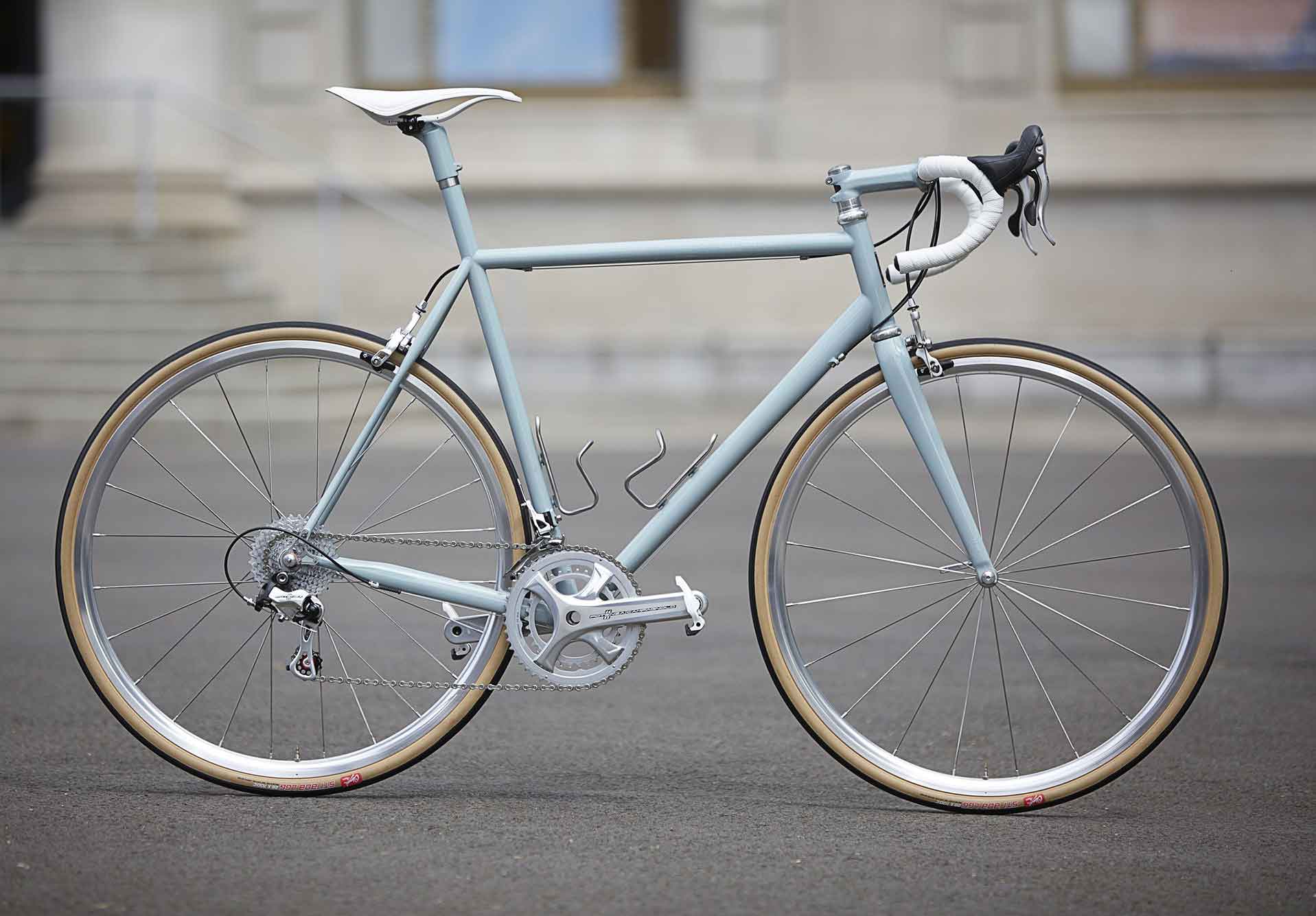
Checklist for buying a second-hand racing bike
The time has come, you have decided to buy your first (or second) racing bike. After hours of looking at Marktplaats or Veloscout After looking around you have finally found your dream bike. We obviously welcome this! But of course there are also some things involved. To check whether the bicycle is in good condition from head to toe, we have created a checklist for you. This can be used on both aluminum and carbon racing bikes.
You can consider this checklist as a handy list where you calmly review the most crucial parts of the bike.
Before we start, we would like to draw your attention to the following point. If something is too good to be true, then it is often too good to be true. Look at the bicycle in the entire setting. A messy shed, nervous salesman and a vague story, but a beautiful bicycle? Then you have to take a critical look at whether this is all correct. An important tip outside the checklist: if your feeling tells you that something is wrong, listen to it. Even though it is annoying that you went somewhere for nothing and it is sometimes difficult to reject the deal in front of someone. Always remember that an additional viewing costs less effort and money than repairs and all the associated hassle.
This checklist for your second-hand racing bike may occasionally contain unfamiliar terms. As everyone knows, Google has answers to all your questions, so be sure to look it up!
Check 1 – Headset and front fork play
Check that the steering head has no play. You do this by pressing the front brake firmly and placing one hand on the front fork. Now move the bicycle back and forth. If you feel that there is movement between the frame and the headset or front fork, this may be a sign that it is worn.
Check 2 – Wheel clearance
Check whether the wheel can move back and forth. Front wheel: grab the front fork and the rim. Now push the wheel away from you and the front fork towards you. Rear wheel: same procedure. If you feel any play, this is not a good sign. This causes the hubs to wear out faster and are expensive to replace.
Check 3 – Bottom bracket/crankset play
This check is very important because damage caused by a crankset with play is almost impossible to repair. The bottom bracket or crankset (is the same) is the part that attaches your pedals and the large chainrings. This part goes through your frame (experts will say that it is the bottom bracket, but we try to keep it simple). It is important that you carefully check that there is no play. If a bottom bracket can move, it will wear away the inside of the frame. And this is almost impossible to replace or only at high cost. How do you check whether there is play on the bottom bracket? Firmly grip the frame and a crank arm and push the bike away from you and the arm toward you. Repeat this a few times to make sure there is no play. Is there any play? Then it is unfortunately advisable to look further.
Check 4 – Check the brakes
Pretty self-explanatory, but of course not unimportant. Check whether the bicycle brakes properly and smoothly. With rim brakes you can see the black brake pads. Check whether they still have enough 'profile'. If you no longer see grooves in the blocks, you need to replace them. It works slightly differently for disc brakes: check whether there is at least 2mm of brake lining on the pads and whether they are worn evenly. If this is not the case, one of the pistons is not working properly (the part that pushes the brake pad). You must also hear no noise within 1 second after releasing the brake, otherwise the pistons will not work properly.
Check 5 – Check indoor and outdoor cables
Take a look at the ends of the cables, if they are rusty or frayed then this is not a good sign. The cables must be in good condition because rusty and worn cables make shifting difficult. By the way, cables are not a deal breaker, as they are cheap to replace.
Check 6 – Check chain and sprockets
There is a special tool to check chain wear, but most people don't have it at home. Therefore, look carefully at the chain, is the chain clean (silver colored) or very dirty (black), is there rust on it? A dirty chain will probably be older and more worn. Also pay close attention to the gears. Check for burrs and whether the gears are not too worn.
Worn gears

Not worn gears

Check 7 – Check rim and hubs
Are there dents or cracks in the rim? What does the rim look like in general? Are all the spokes still in place and is there a knock in the wheel? These are things you need to check.
Check 8 – Tires
Check whether there is still sufficient tread on the tires. Also check that the tires have not dried out. You can recognize this by cracks in the rubber. Dried out tires run the risk of cracking while driving, something you obviously don't want.
Check 9 – Theft check
An app has been developed by the police that allows you to check stolen frame numbers. This app is called: bicycle theft. Check your bike so that you are not faced with any surprises afterwards.
Summary checklist for a second-hand racing bike
These were the most important parts to check when buying your second-hand racing bike. Read this list carefully before you visit a place so that you can check carefully and specifically. Not all bikes will pass this checklist and that's okay. For example, tires and cables are easy to replace, but that does cost money. You can use this, for example, during negotiations. Problems with a crankset or rims are indicators that an expensive repair is coming. In such cases you might want to take a closer look. We wish you the best of luck in choosing your dream bike! Are you missing something in this list or do you have a question about this piece? Then take it contact with us.
Bonus tip – Good cycling clothing
A beautiful bike naturally also requires a stylish and good cycling outfit. So read it our blog in which we explain what good cycling clothing should meet. Or take a look right away our webshop so you can hit the road straight away without any worries!

%20racing%20bike.%20After%20hours%20of%20looking%20at%20Marktplaats%20or%C2%A0Veloscout%C2%A0After%20looking%20around%20you%20have%20finally%20found%20your%20dream%20bike.%20We%20obv...)
Leave a comment
This site is protected by hCaptcha and the hCaptcha Privacy Policy and Terms of Service apply.