





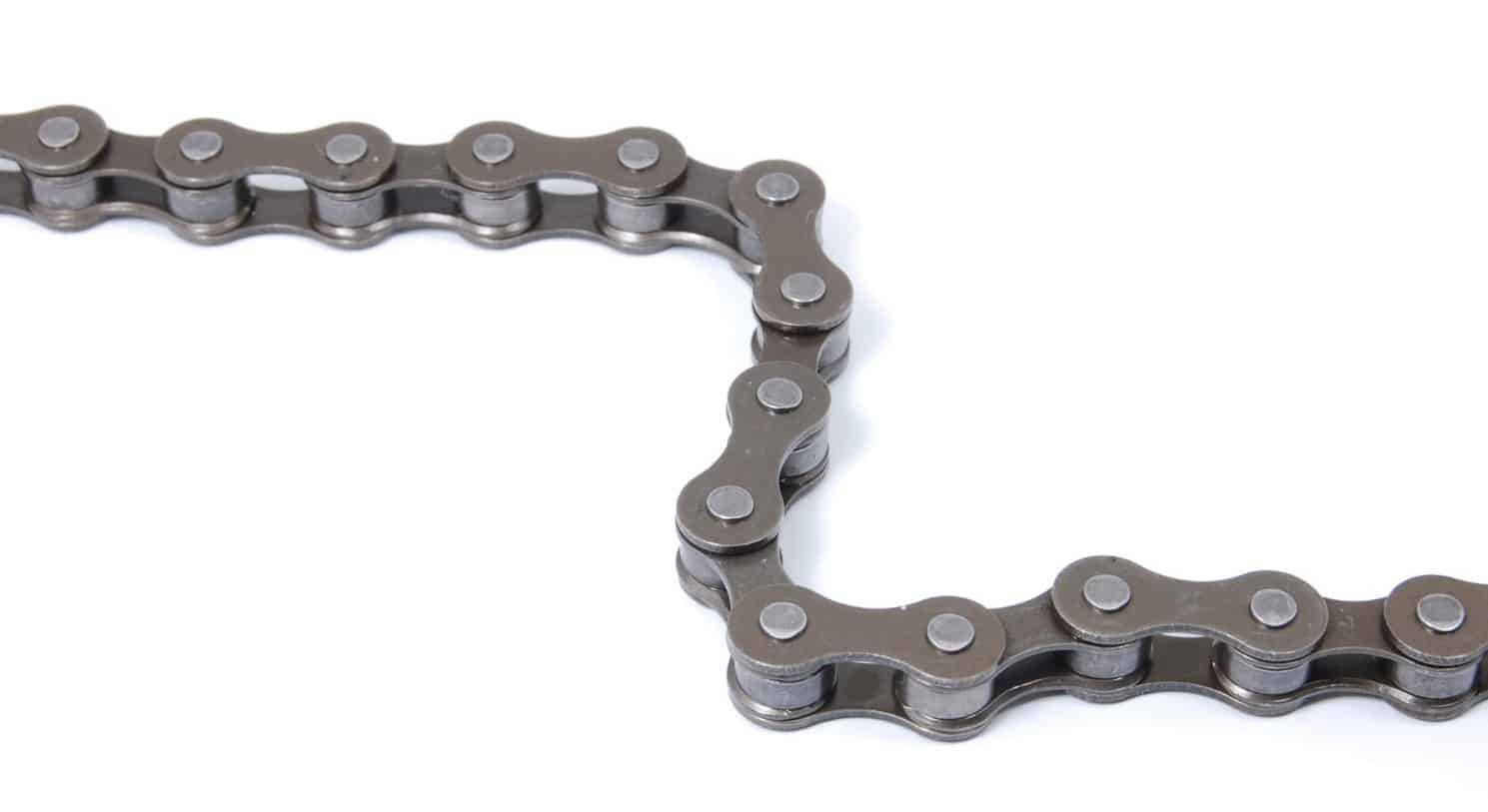
Lubricating your bike chain
In this blog we covered in detail how to properly clean and degrease your bike chain. Once you’ve cleaned the chain on your road bike, it’s time to lubricate it again. To make sure your chain doesn’t end up covered in a black layer of grime again in no time, it’s important to read the tips in this blog carefully. A lot of people use too much oil on the chain and also apply it in the wrong places. In this blog, we’ll explain how to lubricate your chain properly and share practical tips.
Among other things, we answer the following questions:
- Why should you lubricate a bike chain?
- What type of oil/grease/wax/lube should I use for my bike chain
- How do I properly lubricate the chain on my road bike?
- How often should I lubricate the chain on my road bike
You’ll need the following tools to lubricate your bike chain:
- Oil (lube, wax, lubricant)
- A piece of old cloth
Why should you lubricate a bike chain?
A bike chain consists of links that run around sprockets. To keep the links moving smoothly against each other and engaging the sprockets smoothly, you need lubricant. If the chain is too dry (so not enough lubricant), it will start to squeak. Because the links move against each other without lubricant, they will also wear out faster and your bike chain can break sooner. So lubricating your bike chain correctly is very important!

What type of oil/grease/wax/lube should I use for my bike chain?
Before we start lubricating the bike chain, we’ll first explain the different types of lubricants available. In general, men uses oil, lube, wax, or grease. When you look at products suitable for bikes, this usually means lube and wax. Lube is a type of oil developed specifically for bike chains. Regular oil is too greasy and attracts dirt more quickly than lubricants designed especially for bike chains. A common beginner’s mistake: using WD40. Never use WD40 to lubricate your bike chain. Not only does it attract a lot of dirt, it also gets into all kinds of places where it shouldn’t be. On top of that, WD40 can cause parts to rust more quickly.
To lubricate your chain the right way, we recommend using lube. Do you have a mountain bike? Then use wax. When it comes to lube, there are two types: wet lube and dry lube. You might be wondering: what’s the difference between wet lube and dry lube? The difference is quite simple. Dry lube is made for riding in dry conditions, and wet lube is made for riding in wet conditions. The advantage of dry lube is that it’s more durable, so you need to lubricate your chain a little less often. The advantage of wet lube is that it’s specifically developed for riding in dirtier conditions. Because of this, dirt is less likely to stick to it.
Preferably use wet lube, as it tends to attract dirt just that little bit less quickly than dry lube. That means you won’t need to clean your chain as often. Still got a bottle of dry lube? Feel free to use it up, because the difference between wet and dry lube isn’t actually that big.
A useful tip is to use a bottle with a nozzle that fits exactly between the links. This helps you apply the lube cleanly and precisely. We explain why that matters below.

How do I properly lubricate the chain of my road bike?
Properly lubricating your bike chain isn’t difficult, people often just don’t know the best way to do it. For example, we often see people using far too much oil. As a result, a lot of dirt (read: sand) sticks to the chain. When there’s sand on the chain, both the chain and sprockets wear out much faster. That’s why it’s important to lubricate your chain the right way.
The goal of lubrication is to allow the links of your bike chain to move smoothly over one another. That’s why you don’t need to apply lube to the sides of the chain, as this only attracts extra dirt. The only place the oil needs to go is between the links themselves. Most chain lube bottles have a handy nozzle that fits perfectly in between. This ensures the lube is distributed neatly and only reaches the parts where it’s needed.
To start, hold the bottle of lube upside down and place it against the inside of your chain on one of the links. Now slowly begin turning the chain. Once you’ve turned the pedal about two times, the chain will have completed one full rotation. When lubricating, make sure you do about four to five full rotations of the chain.
Then take a clean piece of cloth and run it along the outside and side of the chain. There doesn’t need to be any lube there, so it’s better to wipe it away.
In principle, your chain is now properly lubricated and you’re ready to ride! Have you fully degreased the chain? Then we recommend lubricating it once more after your first ride so the lube can properly work its way in between the links.
How often should I lubricate the chain of my road bike?
The bike chain should always be lubricated after it has been degreased. Beyond that, you don’t need to lubricate the chain very often. You can feel and hear when it’s needed: if the chain feels dry or makes a lot of noise, it’s time to lubricate it again. As a guideline, that’s around every five to ten rides (depending on the distance you ride). We also advise not to use too much lube, because that quickly attracts dirt. So use as little lube as possible. We recommend lubricating your chain a few times with a small amount of oil rather than once with a lot of oil.
Can we help you further?
If you still have questions about maintenance and lubricating your bike chain after reading this blog, feel free to send us a message via the chat function on our website. For now: enjoy your rides!













2 comments
Beste,
Mooie en duidelijke uitleg.
Maar ik zou toch willen zeggen. Dat WD40 een merk is van een hele resem producten.
En dat WD40 ook zeer goede smeermiddelen heeft voor kettingen. Het is wel dat de WD40 kruipolie de meeste bekende is, en dat die natuurlijk slecht is voor de ketting.
Ik wou je dit even melden.
Mvg Jurgen D.
Jurgen
Waar Kan ik die smering lube verkrijgen?
Vr Sjack
Sjack Reijn
Leave a comment
This site is protected by hCaptcha and the hCaptcha Privacy Policy and Terms of Service apply.