





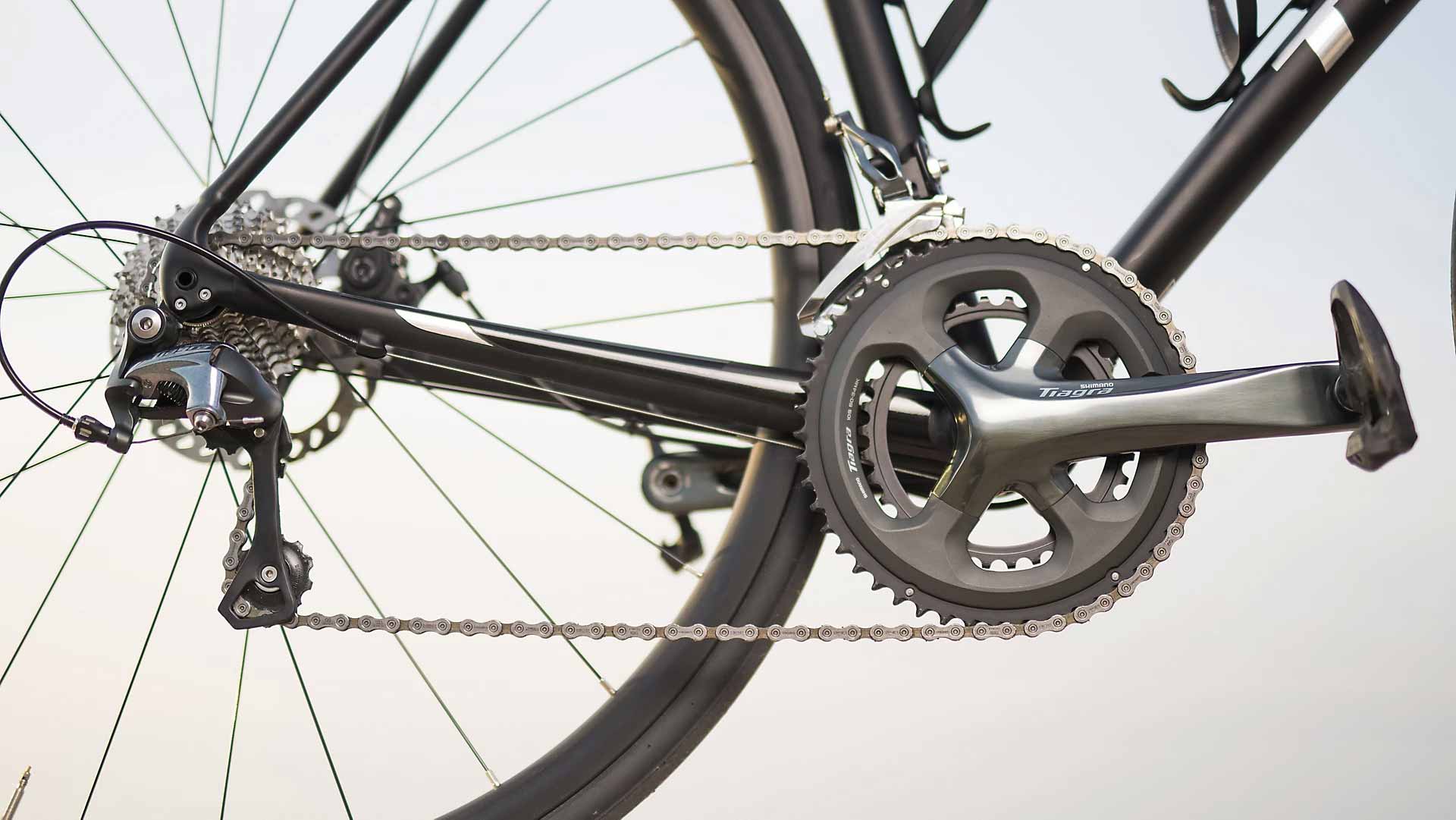
Clean the bike chain of your road bike properly
Keeping your bike chain well maintained is one of the best ways to avoid replacing parts unnecessarily. When your chain and sprockets are properly clean, they wear much less quickly than when they’re dirty and covered in grit. In this blog, we explain step by step how to get the chain on your road bike looking like new again. Please note: the cleaning intervals and tips described here are specifically for the road bike. Although the chain on a gravel bike and mountain bike is cleaned in the same way, it will need to be done more often and more thoroughly.
First of all, how often should you clean your bike chain? We recommend giving your chain a thorough clean at least once every 10 rides. More often usually isn’t necessary, unless you’ve ridden in the rain, for example, or there’s suddenly a lot of dirt on it. You can spot a dirty chain by the amount of black grime stuck to it. A clean chain is almost silver in colour, while a dirty chain is often black. A good tip: can’t you read the lettering on the side of the chain anymore? Then it’s time for a deep clean.
Before we start cleaning the chain, we’ve listed a few essentials. In our view, these tools are definitely worth having at home. They’ll save you money in the long run because proper maintenance helps prevent wear.
In our guide, we remove the chain completely. We use a missing link, a type of link that makes it easy to take the chain off and put it back on. We recommend installing a missing link on your chain as well, so you can remove your bike chain quickly and easily (they’re often under 5 euros). It’s advisable to take the chain off completely while cleaning, because it allows you to clean all components more thoroughly. Don’t have the right tools to remove the chain? Then skip step 1 and read the italicised parts of the text for extra tips on how to clean your bike chain without removing it.
- Chain tool (in the case of a connecting pin) or missing-link pliers (in the case of a missing link)
- Degreaser (preferably biodegradable)
- Empty bottle with a wide cap
- Cloths that can get very dirty
- Spray nozzle (for example from an old all-purpose cleaner bottle) (some degreasers already come in a spray bottle)
- Water

Step 1: Removing the bike chain
Tip before taking off the bike chain: take a close look at how the chain runs over the sprockets and derailleur pulleys, or take a photo if needed, so you’ll know exactly how to reinstall it later.
Chain tool
Using the chain tool, push out the connecting pin (note: this takes a fair bit of force). After that, you can easily remove the chain from the drivetrain.
Missing link
Use the special pliers to squeeze the missing link together. The chain will then come apart easily.

Step 2: Cleaning the bike chain itself
Put the chain in the bottle and fill it halfway with degreaser. Screw the cap on tightly and shake it well for a few minutes. Then let the bottle sit and turn it over from time to time while cleaning the sprockets (and of course, giving it an extra shake now and then is always fine too).
Tip: some people use white spirit, for example, to degrease their bike chain. We recommend using degreasers that are specifically made for bike chains. These degreasers are slightly less aggressive and therefore less likely to affect the metal of the chain. Especially with slightly older chains, we do not recommend using white spirit, as it can affect the metal and may lead to, for example, a broken chain.
If you leave the chain on
Spray the chain thoroughly with degreaser while rotating it. Make sure the entire chain is well covered with degreaser.

Step 3: Cleaning the cassette
Now that the chain is nicely degreasing in its bath of degreaser, we move on to the next step. Remove the rear wheel from the frame so you can access it easily. Use the nozzle to spread the degreaser evenly over the cassette. Rotate the cassette gently so the degreaser can spread properly. In the meantime, turn and shake the bottle with the chain once more.
After letting the degreaser soak in briefly (max. 1 minute), the cleaning can begin. Take a cloth (a brush is fine too, but not essential) and work systematically from the smallest sprocket to the largest sprocket. Make sure to run the cloth well along the sprockets so that sand and other dirt come off. You can also place the cloth between the sprockets. By holding the wheel firmly in place with, for example, your feet, you can clean the cassette thoroughly all the way around. It takes quite a bit of work to remove all the dirt from between the sprockets, but if you do this regularly, it will become less work each time (less dirt also means less dirt can stick).
Step 4: The large front chainrings
After cleaning the cassette properly, give the bottle another good shake. We then continue with the front chainrings as well. Spray them generously with degreaser and let it soak in briefly. Then take a cloth and wipe off all the dirt again. It is only clean once you can clearly see the silver-colored colour of the chainrings again. The inner chainrings can sometimes be a little harder to reach. You can fold your cleaning cloth over a few times and try placing it in between, which will make it a bit easier.
Step 5: Rinsing
Now that everything is properly clean, we’re unfortunately not done yet. To keep the drivetrain running smoothly again, it’s important that all degreaser is completely removed. First, take the chain back out of the bottle. If there is still any residue on it, you can remove it with a cloth or a brush. If you used a biodegradable degreaser, dispose of the remainder in the toilet or similar. If your degreaser is not biodegradable, it must be disposed of properly. Then rinse the chain thoroughly with water until you can feel that no degreaser is left on it (let the chain dry afterwards). Now also rinse your cassette and chainrings with water. Use a bucket of water or a garden hose for this. As long as all the degreaser is properly removed.
Step 6: Refitting the bike chain
Chain tool
Take a new connecting pin, as the old one can no longer be used. Position the chain correctly and push the connecting pin into the right place. Then take pliers and snap off the remaining piece.
Missing link
Put the chain back in its original position and press the missing link together. Then make sure the missing link is on the upper side of the chain and just in front of the front chainrings. Now squeeze your front brake firmly and press down on the pedal. This will lock the missing link into place by itself.
Step 7: Lubricating the bike chain
There are different types of lubricant/oil/lube for lubricating your chain. In the end, it doesn’t make a huge difference, but if we had to give one recommendation, we’d suggest using wet lube. It is slightly more fluid than regular lube, but during a dirty ride it will attract less dirt.
Apply the lube to the drivetrain and rotate the pedals about 6 times (this is around +- 3 full rotations for the chain). This should be roughly enough for the next three to four rides. After lubricating, run a cloth along the sides and underside of the chain so there is no unnecessary oil left there. It only attracts dirt and serves no purpose. The oil really only needs to be on the links; the rest is not functional and only attracts dirt. Also, definitely do not use too much oil! It really isn’t necessary and attracts dirt, causing your chain to wear out faster. Six rotations of the pedals is more than enough. Want to read more about how to lubricate your bike chain properly? Then read our blog about lubricating your bike chain.

Step 8: Time to ride!
Only clean the chain when it’s dirty! Once every 10 rides is only a guideline. Sometimes it may need to be done more often, and sometimes less often. What helps well is going over your cassette and bike chain with a small brush after riding. This removes sand from in between, which helps prevent wear. Lubricate your chain once every five rides and check it from time to time to make sure it isn’t too dry.











1 comment
Wat moet ik juist bestellen onderdelen tandwielen achteraan en ketting en voor met twee tandwielen. Het is een fiets van gazelle. Het is aan vervangen toe .
Graag een bericht Groeten verelst h
Hubert Verelst
Leave a comment
This site is protected by hCaptcha and the hCaptcha Privacy Policy and Terms of Service apply.